Can I Live in My House During a Full Renovation, or Do I Need to Move Out?
From the very beginning, they called us about renovating her kitchen and living spaces in Parramatta. They asked one of the most commonly asked questions by homeowners before a major renovation: "Can we still live in the house whilst it is being renovated? She was cohabitating with two young kids, a dog, and a mortgage, making room for an additional three months in a rented spot out of the house seemed difficult. Most people who are renovating are not looking for a one-size-fits-all solution. She desired a straightforward one.
This home remodeling guide revolves around that question. But the reality is that there is no specific solution that applies to all households. Decisions about whether you can remain or have to evacuate depend on the size of the project, the rooms involved, and how much the family can tolerate. Let’s go through it correctly.
The service level agreement will be based on the scope of work
Renovating a building doesn’t have to be an “all or nothing” proposition. The work done for some projects is in one room; for others, architectural changes are made throughout the property. It’s easiest to determine exactly what kind of renovation you’re undergoing before deciding to stay or go.
Restoration services can be performed on a single bathroom update, new flooring in one room, or the exterior repaint in most families. All tradespeople come in, finish their spot, and go home at the end of the day. However, if a project entails the removal of walls, an upgrade of electrical services, home plumbing, or an expansion of the home’s footprint, the story shifts into a different gear. Issues of dust, noise, water levels and safety are not just occurring in one corner, but part of everyday living.
This is the sort of evaluation we walk clients through during a consultation visit for any residence rehabilitation. The Site Visit tells us a lot more than the phone conversation because two “full renovations” can be as different as night and day!
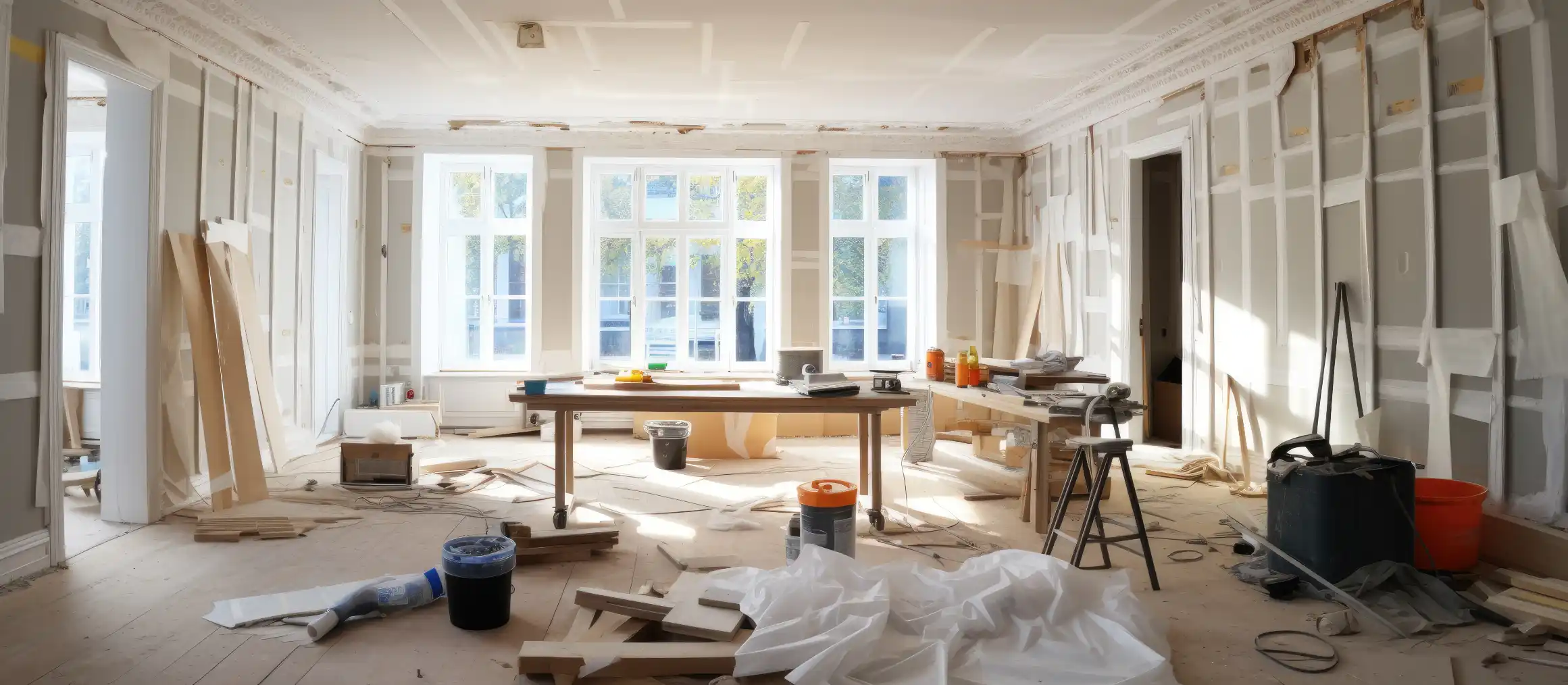
When Staying Home Makes Sense
Many homeowners manage to weather renovations without a problem, and it’s not necessarily a coincidence. It’s not necessarily a stroke of luck, but good preparation, which is what most of the time these homeowners get through their renovations with. Staying is likely to be effective if:
- The renovation is room by room so at least one bathroom and kitchen is always available.
- There is a (luxury) granny flat or garage conversion, and you can use it as a temporary home.
- Very young children, older adults, and those with respiratory sensitivities that dust is likely to provoke are not included in the household.
- The builder provides transparent timetables, so families know which days will be noisy and dusty or lack water so that they can plan accordingly.
It can be tough to live in your home during a renovation, but if you have the proper renovation plan, it can be manageable. Be aware that all good contractors will mark off sections of work with plastic sheeting, maintain clear pathways while carrying out the work schedule, and communicate daily so families do not get the surprise of a sudden water shutdown or get up very early in the morning with work starting.
In such cases, the decision to move out of the house is the better route to take
For all that a project might be managed, there are times when staying isn’t feasible. When the renovation itself can take extended periods to complete and includes works such as removing the entire kitchen, the entire roof, rewiring the entire house, or altering the internal structure, such as demolishing structural walls, then temporary relocation is typically the safer and less stressful choice.
Attention is paid to health and safety conditions here as well. Renovation dust remains in the air for days, and asbestos removal (particularly in older Sydney homes) requires that the property must be completely vacated during that time. This should be taken into account early on in the process, and not after a family has already begun construction, by a family with babies or pets, or anyone who has asthma.
Living away from home doesn’t need to be for months at a time. For most clients, they end up staying with relatives, doing a short-term rental, or settling in a caravan on the land while the building is at its roughest for two or three weeks, before they move back.
Vocabulary for pupils’ success begins with a solid foundation: a Renovation Plan that actually helps students to achieve success
Doing the simplest of things planning before the first hammer falls can make the difference between a smooth renovation and a breaking-into-work frenzy! A renovation plan should include an area-by-area sketch of rooms to be uninhabitable and for how long, how services such as water and power will need to be cut off, and how many days each stage will take.
Also, make sure you are on the same page with your builder from the start, in terms of how often you have to talk. General updates, a joint point of contact, and a realistic schedule eliminate most of the frustration of having a construction site as neighbors. We always stress this with our clients’ renos, as a retarded renovation without progress is much more stressful than a longer renovation with progress (visiting a point weekly, monthly, etc. is far better than weekly, monthly, etc. without visibility).
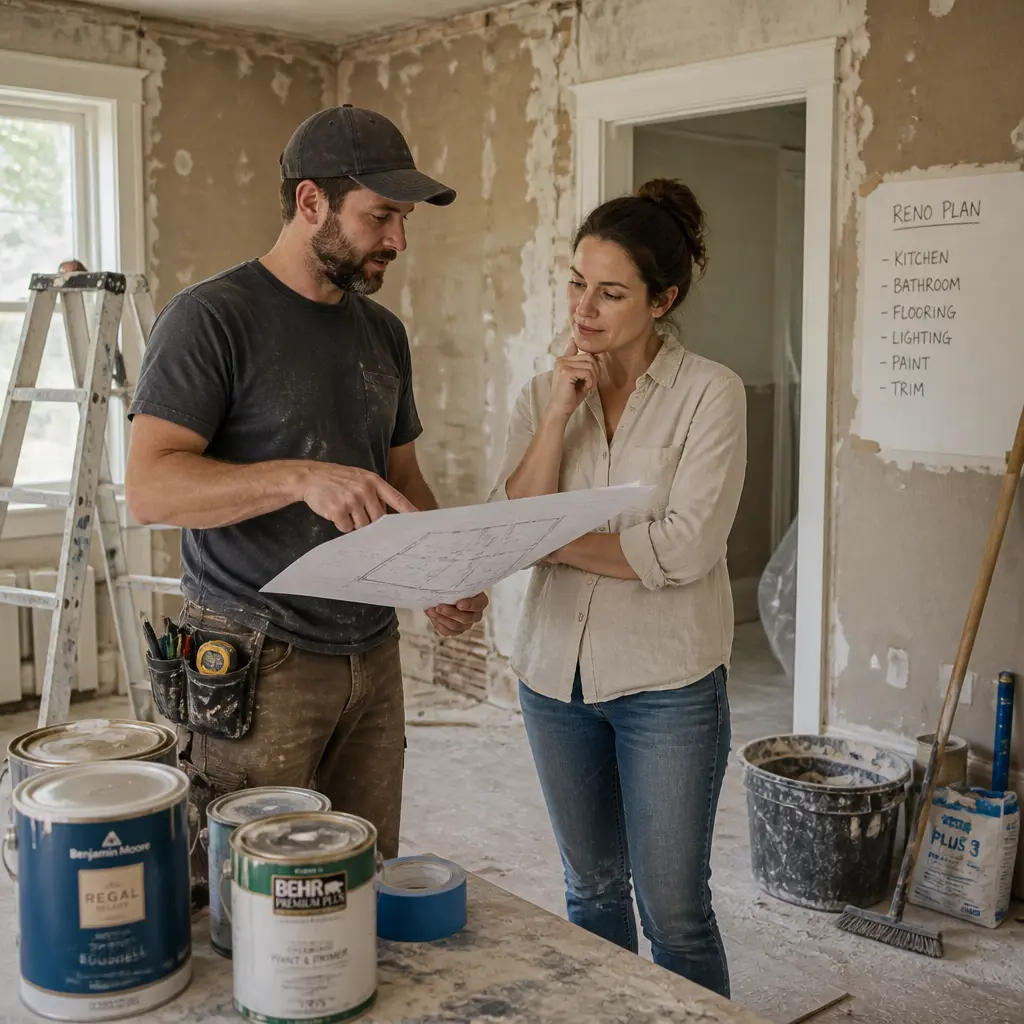
Some house remodeling advice for coping with any house renovation
If you choose to remain, however, here are a few good tips to help you get by:
- If the main kitchen won’t be working, establish a temporary food preparation area with a microwave, kettle, and mini-refrigerator.
- Close doors and seal any gaps in the house with towels to limit dust spreading into the interior of the home from work sites.
- Have a “clean room,” preferably a bedroom and living room, where no tools or materials are allowed.
- Even if renovations are not being done to the room, keep valuables and electronics out of work areas.
- Plan the duration of the work on the site to keep mornings and evenings normal for the family.
The little things will not take away the disruption completely, but they take it down another notch, particularly during the first week, when all is new to you.
How did Priya’s renovation go? How did Priya’s renovation unfold?
Let’s get back to Priya’s project. Ok, back to Priya’s project. With her walking through her home, we suggested there should be a gradual process involved. The family was housed in the back bedroom and a temporary fitted kitchen and living area for the initial five weeks until the kitchen and living space were completely stripped out, but the bathroom areas had remained untouched until the final two weeks. It reduced three awful months to three awkward weeks, and the family was never ones to pack a suitcase again. When the question is, can I stay home, it’s often the real answer, rather than yes or no.
Final Thoughts
The answer of whether to move out for the renovation or stay through the project is a personal and dependable question. It simply depends on the extent, the age, and the disruptions that your household can handle in your home. Getting the right, stepwise renovation plan that is aligned with your project is typically where the issue lies in making the few months not stressful but manageable. If your project is closer to a full rebuild, it's worth reading our comparison of a home rebuild vs major renovation before you decide.
When evaluating this choice for your own house, a good site assessment is a good place to begin. It’s the best way to see exactly what your renovation will truly entail, room by room. And if a full new build is on the table instead, our choice home builders guide explains how to pick the right builder.
Frequently Asked Questions
Can't find your answer?
Ask us directly →Can I live at home during a full house renovation?
In many cases, yes, particularly if the work is phased and at least one bathroom and cooking area remain usable throughout. Larger structural projects or asbestos removal usually require temporary relocation.
How long does a full home renovation usually take?
Timelines vary widely depending on scope, but a full internal renovation typically runs from six weeks to several months. Your builder should provide a phase-by-phase schedule during the quotation stage.
Is it cheaper to move out during a renovation?
Not always. Moving out has its own costs, such as short-term rent or storage, but it can reduce project delays and damage risk, which sometimes offsets the expense.
What renovation work requires me to vacate the property?
Roof replacements, full rewiring, asbestos removal, and major structural changes generally require the home to be vacated for safety reasons, even if only for part of the project.
How can I make living through a renovation easier?
Setting up a temporary kitchen, sealing off work zones, keeping one clean living space, and agreeing on clear site hours with your builder all help reduce day-to-day disruption.
Planning a renovation and not sure if you should stay or go?
We'll walk your home room by room, explain exactly what each stage will disrupt, and build a renovation plan around your family, not the other way around.
Book a renovation site assessment